


Medicare, Travel Insurance, and the Gap Nobody Talks About
Updated October 2026 · By Sara Marsden-Ille
If you’re over 50 and love to travel — or you’re planning the retirement adventures you’ve been dreaming about — you’ve probably thought about travel insurance. Maybe you’ve also wondered whether Medicare has you covered when you’re away from home.
Most people assume they’re protected. They’re not. Not fully. And in one critical scenario — the death of a traveler far from home — the gaps in coverage can leave families facing a financial and logistical nightmare at the worst possible moment.
This guide walks you through all three layers of the senior traveler’s protection picture: what Medicare actually covers, what standard travel insurance handles, and the critical gap that most people don’t discover until it’s too late. By the end, you’ll have a clear, practical checklist to make sure you and your family are genuinely covered — no surprises.
| 64% of adults 50+ expect to travel in 2026 (AARP, March 2026) | 4.2 trips taken on average by adults 50+ in 2025, vs 3.6 planned (AARP) | 86% of adults 50+ say travel is a top discretionary spending priority (AARP) |
Section 1: What Medicare Actually Covers When You Travel
Let’s start with the good news: if you’re traveling domestically, Original Medicare has your back. Parts A and B cover you across all 50 states, Washington D.C., and U.S. territories, including Puerto Rico, Guam, the U.S. Virgin Islands, American Samoa, and the Northern Mariana Islands. If you have a Medicare Advantage plan, coverage generally follows the same rules, though some plans have network restrictions that can limit you to specific providers.
Now the harder truth: the moment you step outside U.S. territory, Medicare coverage largely disappears.
Original Medicare Abroad: Almost No Coverage
Original Medicare — Parts A and B — will not reimburse you for health care received in a foreign country, with only three narrow exceptions:
- You’re traveling between Alaska and another state via the most direct route through Canada when a medical emergency occurs, and the nearest hospital is in Canada.
- You’re in the U.S. when you have an emergency, but you live near the border, and the closest hospital that can treat your condition is in Canada or Mexico.
- You suffer a medical emergency on a cruise ship while it’s within six hours of a U.S. port.
Outside those three very specific situations, international medical bills are entirely your responsibility. The government’s own Medicare website is clear: expect to pay 100% of costs out of pocket if you receive care abroad.
Medicare Advantage (Part C) Abroad
Medicare Advantage plans must cover at a minimum everything Original Medicare covers — which means the same extremely limited international exceptions apply. Some Part C plans do offer additional emergency and urgent care benefits abroad, but coverage varies dramatically by plan and provider. Key things to know:
- “Emergency” and “urgent care” are defined differently by different plans — read the fine print before you travel.
- If you spend more than six consecutive months outside the U.S., you may be automatically disenrolled from your Medicare Advantage plan.
- International coverage, when included, is typically intended for unexpected acute situations — not ongoing or routine care.
Always call your Medicare Advantage provider before an international trip and ask explicitly: what is and isn’t covered, and how do I file a claim if something happens abroad?
Medigap (Medicare Supplement) Plans: Some Help, But with a Hard Ceiling

Medigap plans C, D, F, G, M, and N are required to include a foreign travel emergency benefit — and this is the most meaningful Medicare-related protection available to international travelers. Here’s exactly how it works:
- Covers 80% of the cost of emergency medical care received abroad.
- You pay a $250 deductible before coverage kicks in.
- You’re responsible for the remaining 20% co-insurance.
- Coverage only applies to emergencies that begin within the first 60 days of your trip.
- There is a $50,000 lifetime cap on this benefit. Once exhausted, it’s gone permanently.
For perspective: a serious accident or illness abroad that needs an air ambulance can quickly use up most or all of this cap. Medigap’s foreign travel benefit is a meaningful safety net, but it is not comprehensive protection for serious international medical events — and it covers nothing related to the repatriation of remains.
| Medicare Plan Type | What It Covers While Traveling | International Coverage? |
| Original Medicare (Parts A & B) | All 50 states + U.S. territories | ✘ Almost never |
| Medicare Advantage (Part C) | Domestic + limited emergency abroad | ✘ Rarely — check your plan |
| Medigap (Supplement Plans C, D, F, G, M, N) | Emergency care abroad — 80% after $250 deductible | ⚠ $50,000 lifetime cap; first 60 days only |
| Medicare Part D (Prescriptions) | U.S. only | ✘ No coverage outside the U.S. |
| None of the above | — | ✘ Repatriation of remains is NOT covered by Medicare in any form |
| KEY TAKEAWAY No form of Medicare — Original, Advantage, or Supplement — covers the cost of returning your remains home if you die while traveling. This is a universally overlooked gap. |
Section 2: What Standard Travel Insurance Covers — and What It Doesn’t
Travel insurance is the obvious next layer of protection and genuinely valuable in many situations. But it’s important to understand what it’s designed to do — and where its coverage of death-related costs is often limited, conditional, or incomplete.
What Standard Travel Insurance Generally Covers
- Trip cancellation and interruption — reimbursement if you have to cancel or cut short a trip due to covered reasons (illness, family emergency, severe weather, etc.)
- Emergency medical care — treatment costs for sudden illness or injury during your trip.
- Emergency medical evacuation — transport to the nearest adequate medical facility.
- Lost luggage, travel delays, missed connections.
- Some policies include repatriation of remains as a benefit within the medical evacuation section.
The Repatriation Question: Read the Fine Print
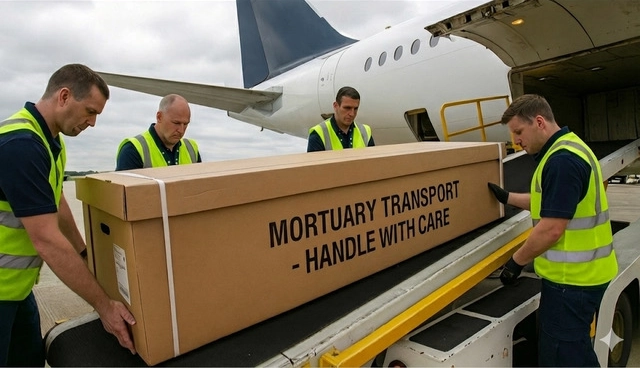
When travel insurance includes repatriation of remains coverage, it’s typically bundled with the emergency medical evacuation benefit — not a standalone, dedicated protection. That distinction matters. Here’s what families often discover when they need it most:
- Authorization requirements: Most policies require your beneficiary to contact the insurer’s 24/7 assistance line and get all arrangements pre-authorized. If your family makes any arrangements independently — even out of necessity — those costs may not be reimbursed.
- Coverage limitations: Many policies specify they’ll cover the least expensive available casket or shipping container. Costlier choices are paid out of pocket.
- Pre-existing condition exclusions: Deaths related to pre-existing medical conditions are frequently excluded unless you purchased a policy with a pre-existing condition waiver within a specific window after booking your trip.
- Per-trip coverage: Standard annual or per-trip travel insurance must be renewed regularly. Forget to renew before a trip, and you’re unprotected.
- Premiums increase with age: The older you are, the more you pay for travel insurance. A senior traveler renewing coverage annually will pay progressively higher premiums each year.
None of this means travel insurance isn’t worth having — it is, especially for the trip cancellation and emergency medical components. But it’s important to understand that even with travel insurance, repatriation coverage may be conditional, capped, or subject to requirements your family may struggle to meet during a crisis.
| “Repatriation costs, such as medical transport, air travel, and coordination with local authorities, can be substantial. Travel insurance with repatriation coverage helps ease that burden—but coverage limits and included services vary by policy, so reviewing plan details helps set clear expectations.” — InsureMyTrip.com |
Section 3: The Gap Nobody Talks About

Medicare covers your health care while you’re alive and traveling domestically. Medigap provides some emergency medical protection abroad, up to a point. Travel insurance handles your trip costs and, potentially, some emergency medical expenses. But there’s a specific scenario that falls between all of these layers:
| What happens when a traveler dies more than 75 miles from home? Not the medical bills. Not the flight home. The physical transportation of their remains — from wherever they died, back to where they’re supposed to be laid to rest. |
This is the gap. And it’s expensive. When a person dies away from home, their family faces a chain of logistics that can include:
- Notifying and coordinating with local authorities and, in international cases, the U.S. consulate or embassy.
- Locating a licensed local funeral home or embalming service.
- Preparing the body in accordance with both local law and destination-country requirements.
- Obtaining the required documentation: death certificate, consular report, burial transit permit, and embalming certificate.
- Arranging appropriate airline cargo or charter transport in a regulation-compliant shipping container.
- Arranging pickup at the destination airport by a local funeral home.
When this happens domestically — say, a snowbird in Arizona or a traveler who passes away on a road trip — families are often shocked to discover that transporting remains home can cost several thousand dollars, depending on the distance (see typical costs).
Internationally, particularly from Mexico, costs and complexity can be even greater, with families navigating language barriers, unfamiliar bureaucracy, and providers they’ve never worked with.
Most families learn what this involves only after it happens, with no time to compare options.
Which Travelers Are Most at Risk of Not Being Adequately Covered?
This gap is especially relevant for:
- Snowbirds — retirees who split time between a primary home and a warmer destination state, like Florida, Arizona, or Texas. If death occurs at the second residence, the “home” funeral home may be states away.
- International property owners — retirees who own or rent homes in Mexico, Costa Rica, Panama, or other popular retirement destinations.
- Frequent long-haul travelers — older adults taking the bucket-list trips they’ve been saving for, including extended stays in Europe, Asia, and Latin America.
- RV and road travelers — retirees who spend significant time on the road, often far from their home state.
- Cruisers — particularly those who disembark at international ports.
Wintering somewhere warm this year? See our guides to the best snowbird cities in Florida, the top snowbird destinations across the U.S. and snowbird travel insurance. Spending the winter in Mexico? Read what happens if you die in Mexico before you go.
Section 4: The Three-Layer Travel Protection Stack

The good news is that building comprehensive protection as a senior traveler doesn’t have to be complicated. Think of it as three distinct layers, each serving a different purpose:
Layer 1: Medicare + Medigap (Your Health Care Foundation)
If you’re on Original Medicare, adding a Medigap plan with foreign travel emergency benefits (Plans C, D, F, G, M, or N) gives you 80% emergency medical coverage abroad, subject to the $50,000 lifetime cap and 60-day trip limit. This is your baseline health care protection — it keeps you covered for the medical situations you can recover from.
If you’re on Medicare Advantage, review your plan’s international emergency benefits carefully before any overseas trip. Don’t assume — ask.
Layer 2: Travel Insurance (Your Trip and Medical Safety Net)
A comprehensive travel insurance policy protects your trip investment (cancellations, delays, lost luggage) and supplements your health coverage with emergency medical and evacuation benefits. For serious international travel, this layer is particularly valuable. Look for policies that include:
- Emergency medical coverage of at least $100,000
- Medical evacuation coverage of $250,000 or more
- A pre-existing condition waiver (buy within the specified window after your first trip payment)
- Clear repatriation of remains language — read what’s actually covered, not just the bullet points in the summary
Layer 3: A Dedicated Repatriation Plan (The Gap Filler)
This is the layer most seniors don’t have — and the one that directly addresses the gap. A purpose-built repatriation plan handles specifically and completely what Medicare doesn’t touch and what travel insurance covers only conditionally.
The Death Away From Home Plan was created to fill this exact gap. For a one-time lifetime fee of $450 for an individual (or $875 for a couple), it provides:
- Full coordination of remains transportation from the place of death to your designated local funeral home — anywhere in the world, for life.
- 24/7 access to a dedicated team that handles all logistics: local funeral home contact, embalming, documentation, permits, shipping container, and destination pickup.
- Coverage for deaths occurring 75 or more miles from your primary residence — domestic and international.
- No annual renewals. No age-based price increases. No per-trip enrollment.
- Backed by a contractual liability insurance policy and fulfilled by Inman Shipping Worldwide, mortuary repatriation specialists since 1978.
Unlike the repatriation component bundled into travel insurance, this plan exists for one purpose: to ensure your family never faces the logistical and financial chaos of bringing you home. One phone call triggers the entire process.
| A Note on Complementary Coverage The Death Away From Home Plan is not travel insurance — it does not cover trip cancellations, emergency medical care, or hospital bills. It is a dedicated repatriation service. Most senior travelers will want both: a travel insurance policy for the trip and medical protection, and a Death Away From Home Plan for the specific scenario of dying away from home. They serve different purposes, and together they provide complete peace of mind. The Death Away From Home Plan can serve as affordable lifetime protection to supplement annual or per-trip travel insurance. |
Section 5: Your Complete Senior Traveler Protection Checklist

Use this checklist before your next trip to make sure all three layers of protection are in place.
#1 Determine Your Medicare & Supplemental Coverage
- Review your Medicare Advantage or Part D plan during Medicare Open Enrollment, October 15 – December 7, 2026. Changes take effect January 1, 2027, so check your plan’s coverage outside its service area before you leave for the winter.
- Know what type of Medicare coverage you have (Original, Advantage, or Supplement).
- If you’re on Original Medicare, confirm whether your Medigap plan includes foreign travel emergency benefits and note the $50,000 lifetime cap.
- If you’re on Medicare Advantage, call your plan provider and ask specifically about international emergency coverage and whether urgent care (not just emergencies) is included.
- Know your plan’s definition of “emergency” vs. “urgent care” — these are different, and coverage rules differ.
- Pack your Medicare card and a summary of your coverage terms for the trip.
#2 Purchase or Renew Your Travel Insurance
- Purchase your travel insurance as soon as possible after booking — ideally within 14–21 days — to qualify for a pre-existing condition waiver.
- Confirm emergency medical coverage amount (aim for $100,000 minimum internationally).
- Confirm medical evacuation coverage (aim for a minimum of $250,000).
- Read the repatriation of remains section carefully — understand what is covered, what requires pre-authorization, and what exclusions apply.
- Save your insurer’s 24/7 emergency assistance number in your phone and share it with a family member at home.
- Review whether your current credit card offers travel insurance and understand its limits.
#3 Enroll in a Repatriation Protection Plan
- Enroll while you’re at your U.S. home address. If you enroll while away, the plan takes effect only once you return home.
- Know the 180-day rule. Stays of up to 180 days in any 12-month period are covered; stay longer and the plan treats that address as your legal residence.
- Tell your family before you go.
- The plan can’t reimburse arrangements a family makes before calling the plan team, and your family can choose the receiving funeral home at the time.
#4 General Pre-Travel Checklist Steps
- Register your trip with the U.S. Department of State’s Smart Traveler Enrollment Program (STEP) for free alerts and easier assistance if something goes wrong abroad. Register at step.state.gov.
- Make sure your passport is valid for at least six months beyond your travel dates.
- Carry printed copies of all insurance policy numbers and emergency contacts, separate from your phone.
- Make sure at least one trusted person at home knows your itinerary and has copies of your key documents.
- Carry any prescription medications in carry-on luggage; many foreign pharmacies cannot fill U.S. prescriptions.
Section 6: Frequently Asked Questions
No. Employer-sponsored health plans and Medicare are designed for living medical care — not the transportation of remains. Even policies that include some repatriation language typically involve significant authorization requirements, limitations, and exclusions. A dedicated plan is the only reliable way to ensure this is handled.
It depends on your policy — and most people don’t read the repatriation section carefully until they need it. Some travel insurance policies do include meaningful repatriation benefits, but they typically require pre-authorization by the insurer’s assistance provider, cover only the least expensive available options, and exclude deaths related to pre-existing conditions unless a waiver was purchased at enrollment. A dedicated repatriation plan removes these conditions and assigns a specialized service to oversee them.
This is one of the most common scenarios. If you spend winters in Florida and summers in Michigan, and you die in Florida, your home funeral home in Michigan is hundreds of miles away. Transportation of remains across state lines still involves coordination with two funeral homes, transportation costs, and documentation. The Death Away From Home Plan covers deaths occurring 75 or more miles from your primary home address — so snowbirds are well within the coverage scenario. Snowbird stays of up to 180 days in a 12-month period are covered.
Yes. The Death Away From Home Plan charges a single one-time enrollment fee — $450 for an individual, $875 for a couple — and provides lifetime coverage. There are no renewals, no annual premiums, and no price increases as you age. Coverage begins at enrollment and remains in force for life.
It is offered at this price as it is a ‘peace of mind’ plan – most seniors do NOT die unexpectedly away from home. If sick, they would return home. This plan is designed to be a contingency for a sudden fatal death or accident.
Your enrolled beneficiary or emergency contact makes a single call to the 24/7 assistance line. From that point, the Death Away From Home team coordinates everything: contacting a licensed local funeral home or service center near the place of death, arranging preparation and appropriate shipping, handling all documentation and permits, and arranging pickup at the destination funeral home. Your family is supported through the process without having to manage logistics independently during an already difficult time.
The Bottom Line
Retirement travel is at record levels. According to AARP’s most recent survey, older Americans took an average of 4.2 trips in 2025 — more than they planned — and 86% consider travel a top priority for their discretionary spending. The desire to explore, spend time with family, and check off bucket-list destinations isn’t slowing down.
What hasn’t kept pace is the planning most travelers do for the unthinkable. Medicare is for living. Travel insurance is for trips. Neither was designed to handle the full cost and coordination of bringing someone home after death away from home — and the families who discover this gap do so at the worst possible time.
The three-layer protection stack described in this guide isn’t complicated or expensive. It’s a practical framework that addresses every likely scenario: health crises, trip disruptions, and the gap that no one else is filling. Building all three layers — Medicare or a Medigap supplement, a solid travel insurance policy, and a dedicated repatriation plan — is the most thorough act of care you can offer the people who depend on you.
| Ready to close the gap? The Death Away From Home Plan provides lifetime repatriation coverage for a one-time fee of $450 (Individual) or $875 (Couples). No renewals. No age-based increases. 24/7 worldwide assistance. Backed by a contractual liability insurance policy and fulfilled by Inman Shipping Worldwide, mortuary repatriation specialists since 1978. Enroll NOW | Questions? Call (646) 466-8877 |
I have been researching and writing about the death care industry for the past 18 years. End-of-life services and experiences are topics most people avoid thinking about until they must face them. My work provides comprehensive and independent resources for families, explaining the workings of the funeral industry, the laws governing funeral practices, and the death care trends that impact consumers. With a BA in Cultural Studies, I bring a unique perspective to analyzing cultural death care rituals, complemented by a career background in Business Management. The death care industry is undergoing significant changes, which I find fascinating. The shift towards cremation services and the emergence of sustainable alternatives like aquamation and human composting are of particular interest. I am also intrigued by how technology is reshaping the funeral planning process and experience. I write for US Funerals Online and DFS Memorials LLC, and contribute to various forums and publications within the death care industry.
