


Traveling during retirement is one of life’s greatest pleasures. Many seniors spend years planning the trips they have always dreamed of—visiting grandchildren across the country, wintering in warmer states, or exploring new destinations abroad.
Yet one topic rarely discussed is what happens if a death occurs away from home.
The truth is simple but often misunderstood: most people assume their Medicare, travel insurance, or credit card benefits will pay to bring their body home. Unfortunately, this is rarely the case.
Repatriation cost—the expense of transporting a deceased person back to their home state or country—can be shockingly high. It is not unusual for families to face $3,000 to $7,000 to bring someone home from another state, and more than $15,000 from abroad, in unexpected bills during one of the most stressful times of their lives.
The short answer: Medicare usually doesn’t cover health care while you’re traveling outside the U.S. (Medicare.gov), and neither Medicare nor Medicare Advantage pays to bring someone home after a death. Most travel insurance and credit card perks fall short too.
This article breaks down, in plain language, why these standard plans do not cover repatriation, and how an affordable travel protection plan from DFS Memorials can spare families emotional and financial hardship.
1. Does Medicare Cover Repatriation or Death Abroad?

Many older travelers assume that Medicare works nationwide for any medical event, including a death away from home. Some even believe it includes coverage to return them home if the worst should happen.
Unfortunately, that assumption is incorrect.
Medicare and death away from home cover — what it really includes
Medicare provides medical coverage in the United States, but it is not designed to cover funeral or after-death arrangements. It covers treatment, not transportation of remains.
Here’s what travelers should understand:
- Medicare does not cover repatriation costs at all.
Whether you pass away in another state or outside the U.S., Medicare offers zero financial assistance for bringing your body home. - Medicare Advantage plans also exclude repatriation.
Although some Advantage plans advertise travel benefits, these are typically limited to emergency medical care, not transportation of remains. - Medicare does not cover funeral or cremation expenses.
Many families do not realize this until faced with thousands of dollars in unexpected costs.
Imagine this scenario:
A retired couple from Ohio winters in Florida each year. One partner suddenly passes away during the trip. Even though Medicare covered their medical needs during life, it will not contribute a penny toward returning them home for burial or cremation.
This financial burden falls entirely on the surviving spouse or family—unless they planned ahead.
If you’re an adult child dealing with this right now, our guide on what to do when a parent dies out of state walks through each step.
2. Does Travel Insurance Cover Repatriation of a Body?
Travel insurance is another common area of confusion. Most people purchase it believing it covers “anything unexpected,” but repatriation is often narrowly defined—and frequently misunderstood.
The fine print about death when traveling that most travelers miss
Travel insurance commonly covers:
- Trip cancellation
- Lost luggage
- Medical emergencies
- Evacuation if you are alive and need transport to a hospital
But transporting human remains is classified differently. Many policies treat repatriation as:
- An add-on benefit that must be purchased separately
- A feature limited to international travel
- A benefit capped at very low reimbursement levels
- A medical-evacuation category (which only applies to living travelers)
Some travel insurance policies even exclude deaths caused by pre-existing conditions—an important consideration for older adults.
Practical example
A woman from Michigan travels to Arizona for a family reunion. She buys basic travel insurance for peace of mind. She unexpectedly passes away during the trip. Her family discovers her policy covers up to $500 toward repatriation—but the funeral home quotes exceed $4,000 just to arrange transportation.
Once again, the family is left with a significant financial and logistical burden.
If a family member at home dies and you have to cancel or cut short a trip, that falls under a different part of the policy; see does travel insurance cover a death in the family.
3. Why Credit Card “Travel Perks” Do Not Include Repatriation of Remains

Premium credit cards often advertise exceptional travel benefits: trip delay protection, rental car insurance, lost luggage reimbursement, and sometimes even emergency medical evacuation.
But these benefits almost never extend to repatriation following a death.
Why credit card coverage is limited
- Credit card benefits are tied to living travelers, not end-of-life arrangements.
- Their travel protection perks are designed for short-term inconveniences, not complex logistical services.
- Repatriation requires coordination with funeral homes, airlines, consulates (if abroad), and legal authorities—far beyond the scope of cardholder benefits.
Even high-end cards that promote “emergency evacuation services up to $100,000” specify that the covered individual must be alive.
This creates a painful misunderstanding: families often assume their loved one’s premium card includes protection, only to find out it does not.
4. What Repatriation Costs, and Why It Varies

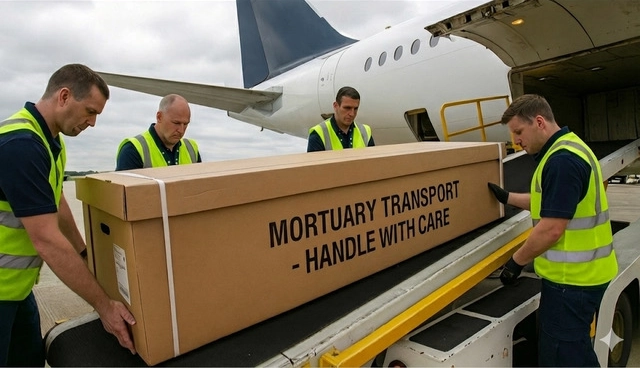
Transporting a deceased person is not a simple airline booking. It involves:
- Local funeral home pickup
- Preparation for transport
- A specialized shipping container
- Coordination with a receiving funeral home
- Airline cargo fees
- Legal paperwork
- In some cases, translation or international handling requirements
Average funeral transportation costs families can face
- Within the U.S.: $3,000–$7,000
- International repatriation: regularly more than $15,000
Many retirees and snowbirds who spend months living in another region each year are unaware of just how expensive and complicated this process can be. For route-by-route examples, see our full guide to repatriation and funeral shipping costs.
A death at sea adds another layer of ports, flag states and foreign paperwork; see what happens if you die on a cruise ship. For a death in Mexico, where many snowbirds spend the winter, see what happens if you die in Mexico.
These high expenses are exactly why families assume Medicare or insurance must cover it—because the alternative is unthinkable.
5. The Affordable Travel Protection Plan — A Simple, Lifetime Solution for just $450

For seniors and retirees who travel even occasionally, an affordable travel protection plan (such as a death-away-from-home plan) provides peace of mind by covering the cost of bringing a loved one home, with no bill sent to the family afterward. The Death Away From Home Plan by DFS Memorials is just this.
One-time online easy enrollment. Payment of $450. Protection for Life.
The Death Away From Home Plan requires no medical evaluation and has no age restriction. In addition, the specialist Death Away From Home team handles all arrangements and logistics and updates the next of kin. Eliminating the worry of making numerous phone calls to coordinate the return of mortal remains.
Unlike Medicare or travel insurance, these plans are designed explicitly for end-of-life transport needs.
What an affordable travel protection plan typically includes

- Full repatriation worldwide, 24/7
- All paperwork, coordination, and transport
- Payment directly to funeral providers—no reimbursement hassles
- Coverage for both domestic and international travel
- A one-time lifetime fee (no annual premiums)
Why this matters for families
- No unexpected bills
- No complicated decision-making during grief
- No stress about logistics
- Assurance that loved ones return home regardless of where death occurs
- Protection that does not expire with age or health changes
For seniors who winter out of state, enjoy cruises, or frequently visit family, this type of protection is one of the most cost-effective travel safeguards available.
Medicare and Repatriation: Quick Answers
Does Medicare cover international travel?
Usually not. Medicare.gov says Medicare usually doesn’t cover health care while you’re traveling outside the U.S. There are narrow exceptions, such as some care on a cruise ship that is in, or no more than 6 hours from, a U.S. port. Some Medigap policies may cover emergency care abroad.
Does Medicare cover a life flight or air ambulance?
Only in a medical emergency. Medicare may pay for an airplane or helicopter ambulance when you need rapid transport that ground transport can’t provide, and only to the nearest appropriate medical facility. After the Part B deductible, you pay 20% of the Medicare-approved amount. It does not pay to fly someone home after a death.
Does Medicare pay for a funeral or cremation?
No. Medicare covers medical treatment, not funeral or cremation expenses, and not transporting a body home.
Does travel insurance cover repatriation of a body?
Sometimes, but often only for international trips, as a paid add-on, or up to a low cap. Read the “repatriation of remains” section of your policy before you leave, and check whether trips within the U.S. are included.
Conclusion: Peace of Mind Requires More Than Traditional Insurance
Most travelers—especially retirees—are unaware that Medicare, travel insurance, and credit card benefits do NOT cover the repatriation cost if they die away from home. These programs were never designed to manage the complex and expensive process of transporting human remains.
This gap leaves families vulnerable to thousands of dollars in unexpected expenses and complicated logistics during one of the most challenging moments in life.
An affordable travel protection plan fills this gap by providing lifetime coverage, simple arrangements, and the assurance that loved ones will be brought home without financial strain.
Final Thought
If you frequently travel, spend winters away from home, or simply want to protect your family from unexpected costs, now is the time to explore your options. Taking a few minutes to secure a plan today can spare your loved ones stress, expense, and uncertainty in the future.
Protect your family—and enjoy your travels—with true peace of mind.
I have been researching and writing about the death care industry for the past 18 years. End-of-life services and experiences are topics most people avoid thinking about until they must face them. My work provides comprehensive and independent resources for families, explaining the workings of the funeral industry, the laws governing funeral practices, and the death care trends that impact consumers. With a BA in Cultural Studies, I bring a unique perspective to analyzing cultural death care rituals, complemented by a career background in Business Management. The death care industry is undergoing significant changes, which I find fascinating. The shift towards cremation services and the emergence of sustainable alternatives like aquamation and human composting are of particular interest. I am also intrigued by how technology is reshaping the funeral planning process and experience. I write for US Funerals Online and DFS Memorials LLC, and contribute to various forums and publications within the death care industry.
