
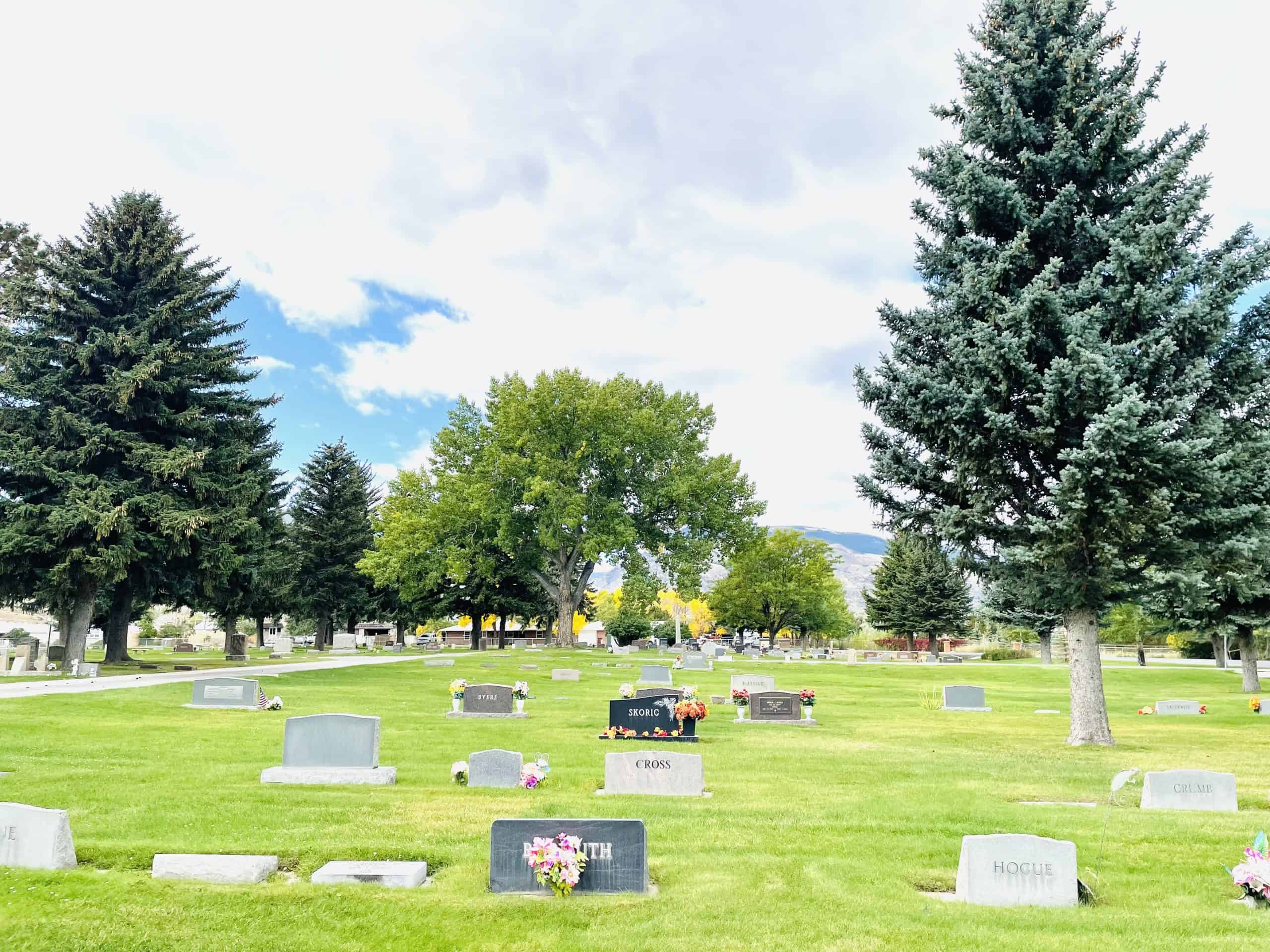


Short answer: moving a buried loved one to another cemetery is called disinterment and reinterment. A licensed funeral director handles it, a permit from the health department or local registrar is needed before the grave is opened, and the family pays both cemeteries, the funeral director and the transport. There is no single national price, so the only reliable figure is a written quote from each of them.
Families move a grave for many reasons: to bring a parent back to the family plot, to reunite spouses, or because the first burial happened far from home in a hurry. This guide explains the steps, who has to agree, which permits are involved, and every cost to ask about before you sign anything.
How moving a body to another cemetery works, step by step
- The family agrees. The next of kin usually has to sign the application. West Virginia’s rule, for example, has the State Registrar issue an authorization “upon receipt of a written application signed by the next of kin and the person who is in charge of a disinterment” or a court order (West Virginia). If relatives disagree, a funeral director may wait for a court order before going ahead (Iowa).
- The new cemetery is arranged. Secure the new plot, and ask what the receiving cemetery charges to open and close the grave and whether it requires a grave liner or vault.
- A funeral director applies for the permit. The permit comes from the registrar or health department where the body is buried now, and it is issued to the funeral director, not the family. In Iowa, permits “will only be issued to the funeral director, and the disinterment must be done under the direct supervision of the funeral director” (Iowa).
- The grave is opened. The current cemetery opens the grave under the funeral director’s supervision. If the original burial container has not held up, New York requires transfer to another container when the body has to travel (New York).
- The remains travel. Over a short distance the funeral home drives; across the country the remains usually travel by air cargo, booked by the funeral home. Our guide to how bodies are transported by plane explains that leg.
- Reinterment. The receiving cemetery opens the new grave, the burial takes place, and the permit paperwork is filed with that cemetery. In Virginia, one copy of the permit travels with the remains and is filed with the person in charge of the cemetery of reinterment (Virginia).
Do you need a permit to move a body to another cemetery?
Yes, in every state rule we checked. The details differ from state to state, which is one reason a local funeral director is needed:
- New York: no body may be disinterred for removal to another cemetery or crematory “without a permit from the registrar of vital statistics having jurisdiction at the place of disinterment.” The funeral director makes the request. No permit is needed to move a body within the same cemetery (10 NYCRR 13.3).
- Virginia: an application goes to the city or county registrar or the State Registrar, and the local registrar issues the permit in triplicate. A move within the same cemetery needs no permit, but the cemetery must keep a record of it (12VAC5-550-430).
- Iowa: the funeral director needs a numbered permit from the Department of Health and Human Services, or a district court order. The permit is valid for 30 days (Iowa Admin. Code r. 645-100.9).
- West Virginia: the closest next of kin and the funeral director both sign the application, which should reach the Vital Registration Office five working days or more before the disinterment. An application is needed in all cases, and the permit is void 60 days after issue (West Virginia form VS-DR).
If the move crosses state lines, the permit comes from the state where the body is buried now. Ask the receiving cemetery what paperwork it needs to accept the burial.
How much does it cost to move a buried body?
Prices vary widely by cemetery, state and distance, and we have no reliable national average to quote. What we can tell you is what goes into the bill, so you can ask for each line in writing:
- Opening the old grave. The FTC notes there are charges, “usually hundreds of dollars,” to open a grave for interment, and additional charges to fill it in (FTC). A disinterment is often priced separately; ask the cemetery.
- The funeral director’s services: applying for the permit, supervising the disinterment, and handling the remains.
- A new container, if the original one has not held up.
- Transport, by road or air cargo, and a receiving funeral home if the distance is long. Our funeral shipping cost guide explains what drives transport prices.
- The new grave: the plot itself, opening and closing at the new cemetery, and a liner. “Most, but not all, cemeteries require you to purchase a grave liner, which will cost several hundred dollars” (FTC). Ask whether perpetual or endowment care is included.
- The headstone or marker: removing, moving and resetting it, or a new one if the receiving cemetery has different rules.
- The permit fee, which depends on the state or county.
Know your rights when you ask. A funeral home must give you a General Price List that is yours to keep, but “the FTC’s Funeral Rule does not cover cemeteries and mausoleums unless they sell both funeral goods and funeral services” (FTC, FTC). So ask each cemetery for its fee schedule in writing before you commit.
Why a grave ends up far from home, and how to avoid it
Sometimes the first burial happens close to where the death occurred, because bringing someone home looked too costly or too complicated in the first days. Within the U.S., bringing someone home commonly costs $3,000 to $7,000, and international repatriation regularly exceeds $15,000. Moving the grave years later means paying for two burials and a journey home.
If a parent has just died out of state and the family is deciding where the burial should be, our guide on what to do when a parent dies out of state covers the first calls.
Bring them home the first time
One payment of $450 covers the journey home, for life
If you die 75 miles or more from home, anywhere in the U.S. or overseas, the DFS Travel Protection Plan brings you home, or arranges a direct cremation where the death happened and brings the cremated remains home. Your family makes one call; the plan handles the funeral home, paperwork, consulate, transportation and cost. $875 for a couple. The plan applies when a death happens away from home; it does not pay to move an existing grave.
Frequently asked questions
Can you move a buried body to another state?
Yes. A licensed funeral director obtains a disinterment permit from the state or local registrar where the body is buried, supervises the disinterment, and arranges transport to the new cemetery, where the reinterment takes place.
Can you move a body from one grave to another in the same cemetery?
Usually, and some states need no permit for it: New York and Virginia exempt moves within the same cemetery. West Virginia asks for an application in all cases. The cemetery will still charge to open and close both graves.
Who has to agree to move a grave?
Generally the next of kin, who signs the application with the funeral director. If relatives disagree, a court order may be needed before the funeral director goes ahead.
How long does a disinterment permit last?
It depends on the state. An Iowa permit is valid for 30 days; a West Virginia permit is void 60 days after it is issued.
How much does it cost to move a buried body?
It depends on both cemeteries, the distance and your state. Ask for written prices for opening the old grave, the funeral director’s services, any new container, transport, the new plot with its opening, closing and liner, and moving the headstone.
This article is general information, not legal advice. Disinterment rules are set by each state and change; your funeral director and both cemeteries can confirm what applies to you.
Sources
- New York Codes, Rules and Regulations, 10 NYCRR 13.3: Disinterments
- Virginia Administrative Code, 12VAC5-550-430: Disinterment permits
- Iowa Administrative Code r. 645-100.9: Disinterments
- West Virginia, Disinterment-Reinterment Application and Permit (VS-DR)
- Federal Trade Commission: Buying a Cemetery Site and The FTC Funeral Rule
- Plan details: Enroll Now and FAQ
Reviewed by Sara Marsden-Ille · November 2026
I have been researching and writing about the death care industry for the past 18 years. End-of-life services and experiences are topics most people avoid thinking about until they must face them. My work provides comprehensive and independent resources for families, explaining the workings of the funeral industry, the laws governing funeral practices, and the death care trends that impact consumers. With a BA in Cultural Studies, I bring a unique perspective to analyzing cultural death care rituals, complemented by a career background in Business Management. The death care industry is undergoing significant changes, which I find fascinating. The shift towards cremation services and the emergence of sustainable alternatives like aquamation and human composting are of particular interest. I am also intrigued by how technology is reshaping the funeral planning process and experience. I write for US Funerals Online and DFS Memorials LLC, and contribute to various forums and publications within the death care industry.
